
Swindon & Wiltshire News

Albert Goodman-led Rural Accountancy Group urges government to rethink inheritance tax increase on farmers
The Rural Accountancy Group (RAG) has launched a new report reflecting on the wider implications of increased inheritance tax on farmers.
Led by South West-based accountancy firm Albert Goodman, the report comes following Rachel Reeves’ Autumn Budget, which the group says effectively introduced a 20 per cent tax charge on businesses and agricultural property values of more than £1 million.
The RAG, which comprises 10 accountancy firms representing around 10,000 farming and agricultural businesses across England and Scotland, hopes to demonstrate the real impact on many farm businesses who have planned their succession based on the current measures.
The report also presents alternative solutions the RAG claims will have less of an impact on genuine commercial farming while still raising tax and preventing tax avoidance.
Before the Autumn Budget, there was no cap in place on Agriculture Property Relief (APR) and Business Property Relief (BPR) which provided inheritance tax exemptions for agriculture and business property assets.
This allows businesses to be handed onto the next generation without a need to sell assets, building stability and confidence.
Under Labour’s new proposal however, from April 2026 a cap will be placed on both APR and BPR for assets over £1 million.
As assets qualifying for APR and BPR tend to be illiquid, the RAG has raised concerns over how the IHT would be funded without a sale of the business or assets used in the business, affecting even the smallest of farms.
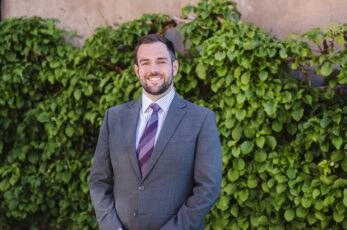
Sam Kirkham, partner at Albert Goodman and RAG spokesperson said: “There has been much distress from farmers across England and Scotland in the wake of the Autumn Budget IHT announcements.
“Working as closely as we do with agricultural businesses, the RAG felt it vital to collaborate to raise our concerns over the chancellor’s proposed changes.
“The report demonstrates that as things stand, the proposals are ill thought through and will do little to discourage those investing in land for tax avoidance purposes.
“Instead, the changes will force hard-working families to change the structures of their businesses to minimise its impact, needlessly disrupting operations and reducing investment in their business.”
Among the RAG’s suggested revisions of the Chancellor’s proposals is to increase the qualifying period for APR and BPR from two years up to ten years.
“This would make purchasing land a far less attractive investment for those looking to avoid tax, while protecting those landowners passing businesses down through generations.
“The Chancellor has drastically overlooked the affordability of the new IHT introductions for small to medium sized farms, even spread across the proposed ten year payback period, as evidenced by our case studies.
“We at the RAG strongly urge Government to reconsider its proposals and ensure it supports the rural and small business community.”
Latest: Two new directors appointed at Albert Goodman



Sky’s the limit for West accountancy firm
Read more30.04.2026
Businesses react to Spring Statement
Read more05.03.2026
Four new senior appointments at regional accountancy firm
Read more21.01.2026
Twenty-one trainees join accountancy firm Albert Goodman
Read more15.10.2025
Accountancy firm Albert Goodman celebrates a record-breaking year
Read more11.06.2025
Three new partners appointed at accountancy firm
Read more23.04.2025
Bristol International Balloon Fiesta to return in 2025 with Albert Goodman as lead sponsor
Read more13.03.2025
Two new directors appointed at Albert Goodman
Read more04.03.2025