
Swindon & Wiltshire News
UK offices ‘failing older workers,’ warns workplace design firm
UK office design has a “significant blind spot” when it comes to older and disabled workers, according to Bath-based workplace design and build company Interaction, which has launched a free checklist to help landlords and employers close the gap.
The B Corp-certified firm says the industry has become increasingly confident in promoting neuro-inclusive workplaces, while paying far less attention to the everyday physical barriers that can make offices difficult to use for staff whose needs change with age.
Its Age-Inclusive Design Checklist covers practical specification issues including door hardware, meeting-room technology, lighting, signage, wayfinding and temperature management. It is aimed at landlords, employers, facilities teams and fit-out specifiers.
The intervention comes as the demographics of the UK workforce shift sharply. People aged 50 and over make up nearly a third of the UK workforce, according to the Centre for Ageing Better.
At the same time, the State Pension age is rising from 66 to 67 between April 2026 and April 2028, while Department for Work and Pensions figures show the average age of labour-market exit reached 65.8 for men and 65.1 for women in 2026—the highest levels recorded in ONS data.
Interaction argues that those trends make age-inclusive design a commercial and operational issue, rather than a niche accessibility concern. Offices are increasingly being used by employees who may experience reduced grip strength, changes in eyesight or hearing, mobility needs, or temperature sensitivity over a career lasting three decades or more.
The checklist draws on the company’s project experience and sets out measures such as door and hardware specification for reduced dexterity, hearing loops and captioning provision in meeting rooms, and lighting and signage contrast standards for ageing eyesight.
It also covers environmental controls to support menopause-related needs and guidance on introducing new technology while ensuring staff are supported to use it.
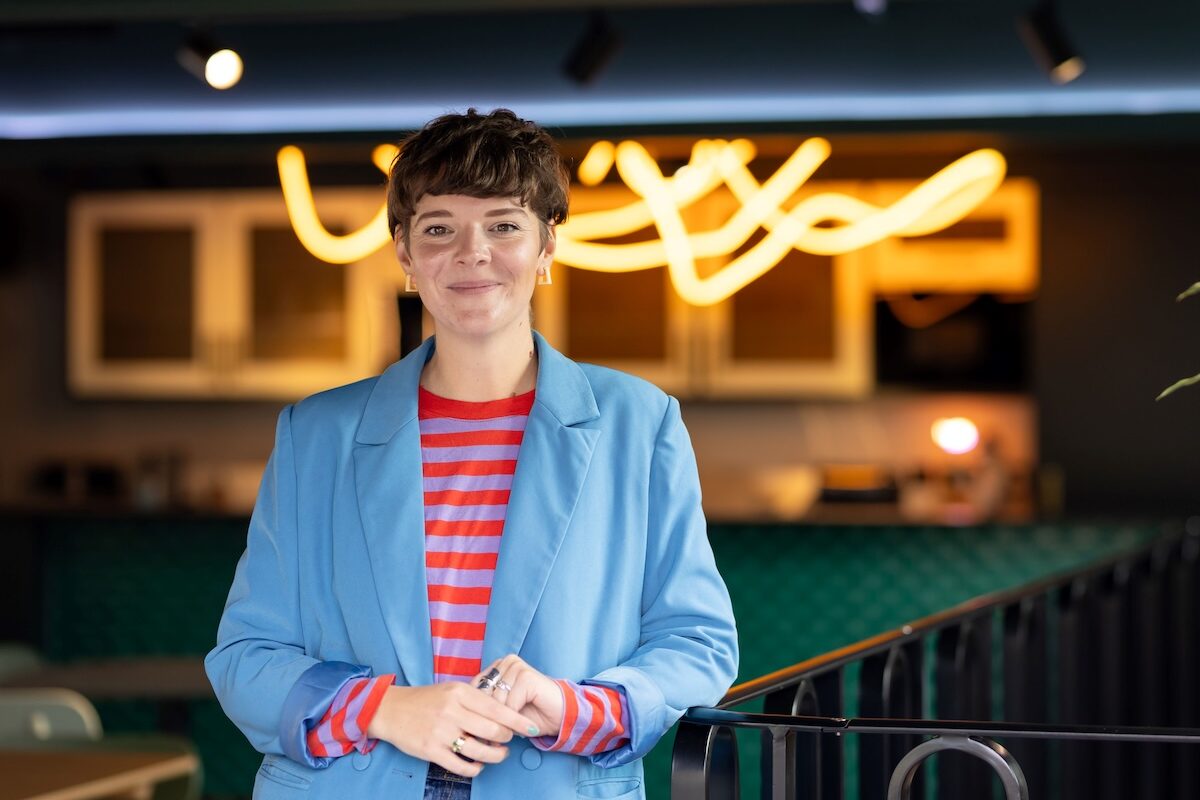
Sarah Pasquall, creative lead at Interaction, said many modern offices had made progress on neuro-inclusion but continued to overlook basic physical accessibility.
“Many modern workplaces have neuro-inclusive breakout spaces, and rightly so: that work matters,” she said. “But almost none of them mention that a cold metal door handle is genuinely painful if you have arthritis, or that modern meeting rooms can be unusable for someone with a hearing aid.”
She added: “Some areas of inclusive design have really improved, but this isn’t one of them. We should be doing more to design workspaces that support a body that changes over a 30-year career.”


Private members’ club shortlisted for international design award
Read more12.08.2026
Workplace expert cuts carbon emissions by a third – despite office expansion and business growth
Read more12.01.2026
Britain’s Best Office Dog crowned by Bath firm
Read more05.01.2026
Interaction appoints first design director
Read more06.11.2025
Co-working fit out earns top flex space award for x+why
Read more03.11.2025
Interaction expands team as demand for sustainable workplaces grows
Read more22.10.2025
Interaction designs new co-working hub on the south coast for FOUNDRY
Read more01.09.2025
Workplace design company styles new co-working space in home city
Read more08.05.2025