

Swindon & Wiltshire News

Swindon-headquartered WHSmith puts high street stores up for sale
Swindon-headquartered retail giant WHSmith has put its high street stores up for sale.
The company confirmed at the weekend that it was seeking a buyer for its 500 high street outlets.
The announcement means uncertainty for the group’s 5,000 high street retail staff.
But it could also result in the disappearance of the 232-year-old chain’s name from UK high streets – it is understood that the use of the brand itself will be up for negotiation with any prospective buyer.
The sale will allow it to concentrate on its successful travel arm, which has branches in airports all over the world. The brand also has successful railway station and hospital outlets.
In a statement, the publicly-listed company said: WHSmith confirms that it is exploring potential strategic options for this profitable and cash generative
part of the Group, including a possible sale.
“Over the past decade, WHSmith has become a focused global travel retailer. The Group’s Travel business has over 1,200 stores across 32 countries, and three-quarters of the Group’s revenue and 85 per cent of its trading profit comes from the Travel business.
“There can be no certainty that any agreement will be reached, and further updates will be provided as and when appropriate.”
For years, the group’s travel division has driven its revenue and profits.
In its annual statement issued in 2024, the firm reported revenues of £1.9 billion and profits of £166 million – up from £143 million the previous year.
Trading profits were up 15 per cent at its shops based in railway stations, airports and hospitals.
The strategy was explained to Swindon business leaders in 2019, at the annual conference of Swindon and Wiltshire Local Economic Partnership.
Steve Clarke, who was in his last week at the firm as CEO, told delegates how WHSmith had refused to take on Amazon head-to-head for online sales. Instead, it had concentrated on selling products to customers who couldn’t order online – in transport hubs like airports and railway stations, and in hospitals.
Even before the pandemic, high street stores were struggling. “The last ten to 15 years has been a turbulent time in UK retailing – and at the minute it is brutal,” he said.
“In 2000 everything changed. Supermarkets started selling non-food items, and the internet came along. Suddenly we had more and more competitors.
“When I joined WHSmith in 2004 we could buy CDs cheaper from supermarkets – who were selling at cost price – than we could from our own suppliers.”
He said market share diminished further with the advent of online shopping.
“(Amazon) started with our categories first: books, then CDs. All the pain that retailers are going through now because shopping habits have changed, we went through 15 years ago.
“Rather than spend hundreds of millions of pounds on a website, we invested in train stations and airports, both here and outside the UK,” he said.
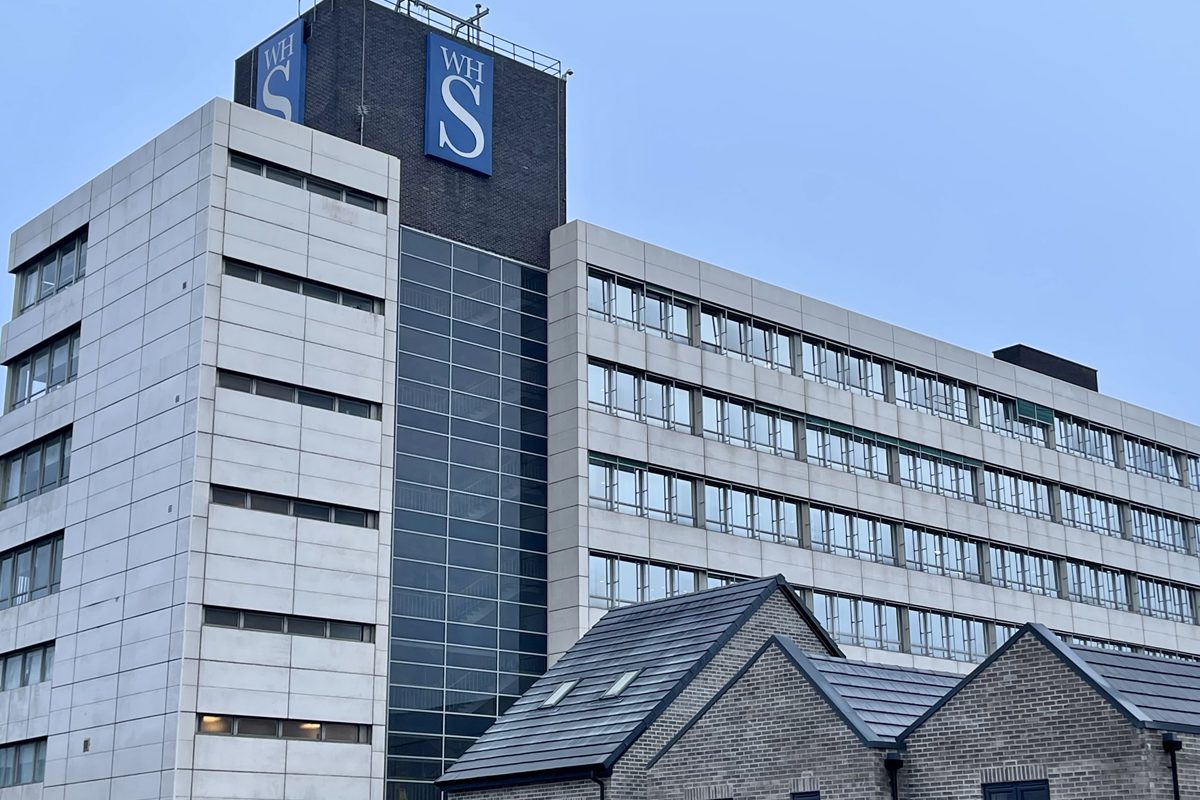
Pictured: WHSmith’s headquarters in Swindon




Thanks Donald – WH Smith cuts outlook amid weaker passenger spending
Read more23.04.2026
WH Smith appoints new executive chair
Read more19.01.2026
WH Smith posts financial results after profit warning that led to CEO’s departure
Read more19.12.2025
WH Smith boss quits with immediate effect following accounting probe
Read more19.11.2025
WHSmith to disappear from high streets after £76 million sale
Read more28.03.2025
Travel business boosts WH Smith revenues by 28 per cent
Read more06.09.2023