
Swindon & Wiltshire News

Growth summit: WH Smith boss reveals secret of success – not taking on Amazon
The outgoing boss of Swindon-based retail giant WH Smith used his last day in the town to share a surprising secret with business leaders.
Steve Clarke, who leaves the CEO post this week after 15 years with the business, told delegates at the Swindon and Wiltshire Local Economic Partnership Growth Summit that refusing to take on Amazon head-to-head had kept the 227-year-old retailer in profit.
“The last ten to 15 years has been a turbulent time in UK retailing – and at the minute it is brutal,” he told delegates at the conference, which was held at Cineworld cinema in the town’s Regent Circus complex – where supermarket Morrisons is considering its future after just five years of trading.
He gave delegates a potted history of the company and the challenges it had faced since it was established in 1792. He recalled how the business started as a news stand, which took advantage of the railway boom and opened outlets at stations across the UK.
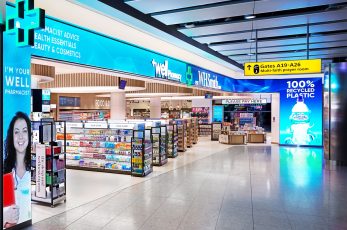
When envious rail operators realised how much money the company was making, they imposed rent increases of 80 percent. But the firm merely relocated to high streets on the approaches to the busiest stations. Having come full circle, its travel hub outlets are now responsible for the 15 years of sustained profits the company has enjoyed. “We were the first retailer to open at Heathrow and Gatwick,” he noted.
“Our high street stores began as a defence strategy, but the business showed an ability to adapt to change. We rode the waves of changing technologies – when CDs replaced vinyl, and when paperback books replaced hardbacks,” he said.
“But in 2000 everything changed. Supermarkets started selling non-food items, and the internet came along. Suddenly we had more and more competitors. When I joined WH Smith in 2004 we could buy CDs cheaper from supermarkets – who were selling at cost price – than we could from our own suppliers.”
But it was the advent on online retailer Amazon – with a long term strategy that, said Steve, means it doesn’t have to make a profit for shareholders, concentrating instead on cornering a larger and larger share of the market until the competition has gone – that proved the biggest shock to the businesses.
“They started with our categories first: books, then CDs. All the pain that retailers are going through now because shopping habits have changed, we went through 15 years ago.”
With customers making purchase decisions on price alone, some high street retailers decided to match the internet giant on price and beat them on delivery – leading to a drastic fall in profits. Instead, WH Smith adopted a mantra of ‘profitable sales’. It stopped selling CDs – “that was 25 percent of our sales gone” – and focussed on stationery.
“And rather than spend hundreds of millions of pounds on a website, we invested in train stations and airports, both here and outside the UK.”
As a result, the company now has 600 high street businesses – the same number it had 10 years ago and 20 years ago. Steve’s replacement at the helm of the retailer will be Carl Cowling, currently the managing director of WH Smith’s high street division.
“Digital first may be right for many businesses, but not for WH Smith,” said Steve. “We have a strategy that if we are going to invest money we need to see a payback in two years. My advice? Digital can soak up so much money. Set yourself clear criteria, and if it doesn’t clear the hurdles, don’t do it.”
Latest: Swindon-headquartered WHSmith puts high street stores up for sale