
Swindon & Wiltshire News

Number of households to grow by fifth in West by 2040
The number of households in the South West is set to grow by 20 per cent, adding more than 498,800 households to the region by 2040, according to the latest research by socio-economic experts at planning, design and development consultancy Marrons.
The analysis – part of Marrons’ newly updated Housing 2040: Phase II report – reveals significant demographic shifts that will shape housing demand across the region in the next 14 years.
The data shows South Gloucestershire is projected to have the largest increase in 25-44-year-old households, rising by 36 per cent, reflecting strong demand for family and starter homes.
The area is also forecast to have the greatest rise in 19-24‑year‑old households, increasing by 19 per cent, signalling opportunities for purpose‑built student accommodation (PBSA) and co‑living schemes.
Swindon will experience the most substantial growth in its later living population, with households aged 65 and over increasing by 51 per cent, driving demand for rightsized and retirement‑focused housing.
Plymouth is expected to lose the most social housing by 2040, with its stock plummeting by 2,800 if current trends continue.
Craig Pettit, planning director at Marrons, who is based in Bristol, said: “The South West is entering a period where housing demand will play out very differently across the region, placing increasing pressure on how growth is planned and delivered at a local level.
“Around Bristol and in areas such as South Gloucestershire, demand from younger households and working-age families will continue to drive the need for well-located, deliverable sites that support both ownership and rental markets.
“These are structurally different pressures to those being seen elsewhere in the region and require a more targeted response.
“In contrast, towns like Swindon are seeing a pronounced shift towards older age groups, bringing greater urgency to later living and retirement-led provision. This creates a more complex planning environment than we have historically seen.
“It is no longer sufficient to rely on broad housing targets or standard site allocations – what is required is a much clearer alignment between local plan policy, demographic reality and the type of homes being brought forward.
“It will also require local authorities to be more aligned, which the rollout of the strategic planning system will positively influence and provide a mechanism for these strategic level matters to be planned.
“For the South West, the priority is to plan with greater intent – recognising distinct local markets, supporting a broader range of housing models and ensuring delivery keeps pace with how the region is changing.
“That will ultimately determine whether growth can be accommodated in a way that is both sustainable and economically productive.”
The Housing 2040: Phase II report draws on the most up-to-date datasets available, including Office for National Statistics 2022-based household projections, published in October 2025 – the first in more than five years – covering overall 16+ household growth and age demographic breakdowns.
It also incorporates local authority housing register data for 2025, providing a real-time view of unmet social housing need, and social housing stock movements (2014/15-2023/24), including demolitions, Right to Buy sales and new completions.
The report identifies where first-time buyer demand will be strongest, highlights regions losing the most social housing, and maps growth in later living, student-age and young professional households across every English region.
Dan Usher, economics director at Marrons, said: “England faces a national housing challenge of unprecedented scale. By 2040, millions of new homes will be required across the country to accommodate population growth, the rising number of young adults and an ageing population.
“The pressures are not uniform – some regions like Yorkshire and The Humber will see rapid growth in first-time buyers, students and older households, while other areas face acute social housing shortages.
“Meeting this demand will require more than simply increasing supply – we need the right mix of housing: starter homes, family homes, retirement properties and specialist accommodation such as PBSA and co-living.
“Without urgent action, the country risks locking in decades of unmet need, putting pressure on affordability, households and local authorities. Our analysis makes clear that now is the time to build strategically – ensuring homes are delivered where they are needed most.”
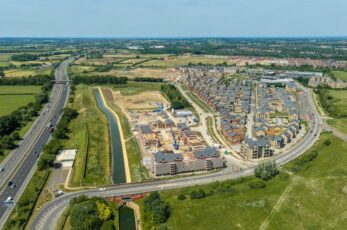
Image by wal_172619 at Pixabay



Grey belt policy continues to increase housing planning permissions – survey
Read more19.03.2026
Planning consultant announces 10 promotions
Read more06.11.2025
Almost 600,000 new homes needed in South West by 2040 – research
Read more15.01.2025
Bristol will need more than 60,000 new homes by 2040, while Swindon’s pensioner population is expected to rocket
Read more24.04.2024
Bristol consultancy Marrons expands with urban designer hire
Read more10.10.2023
Planning and design consultancy Marrons expands with trio of architectural hires
Read more30.05.2023
Marrons expands into South West with team hire and brand update
Read more19.12.2022