
Swindon & Wiltshire News
Business world responds to Labour’s second Budget
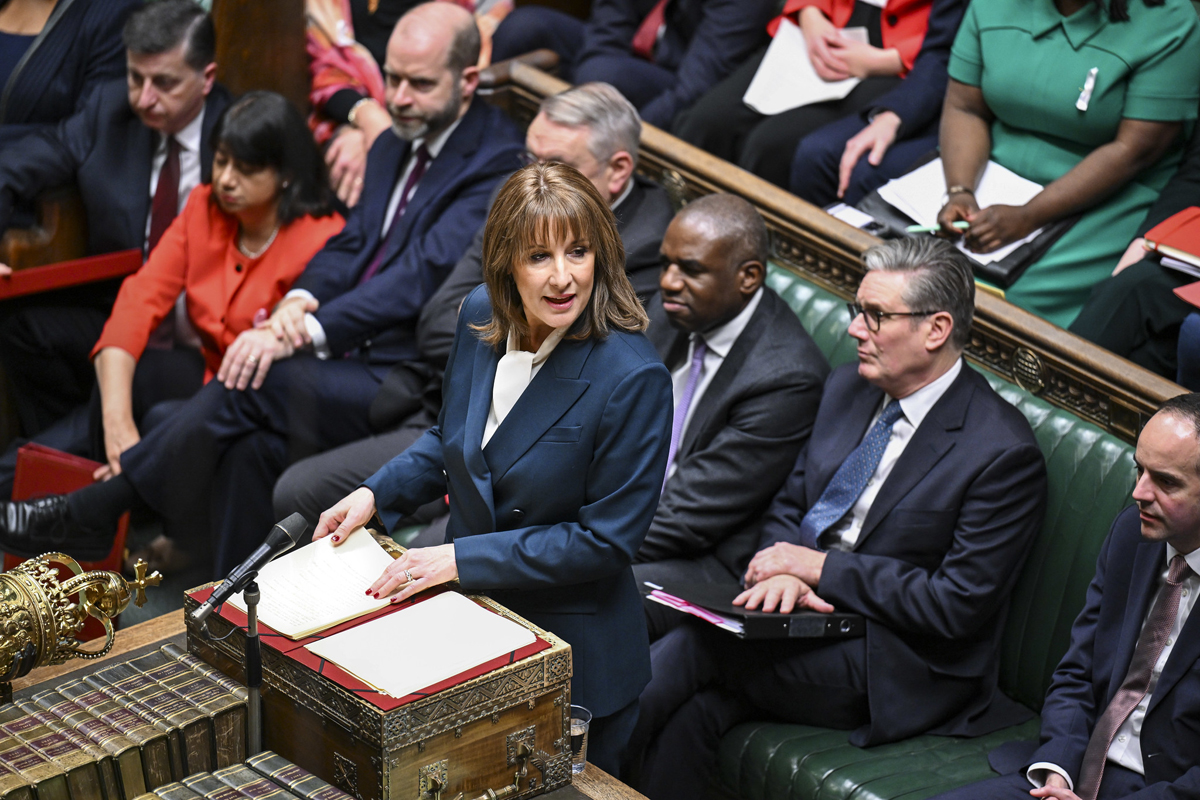
Chancellor Rachel Reeves has delivered Labour’s second Budget. With more pre-announcement kites flying than a kite-flying festival there were few big surprises. But as always there were winners and losers. Business Biscuit has gathered a host of experts to help make sense of it all.
The Treasury said backing business through the tax system, maintaining the lowest corporation tax rate in the G7 and introducing targeted reliefs for SMEs and high street firms.
A three-year stamp duty reserve tax exemption for newly listed firms boosting liquidity and giving scaling firms a compelling reason to choose the UK, it said, while ISA reform would help people invest will drive around £3 billion of retail investment towards UK-listed companies.
Extending the temporary 5p fuel duty cut for a further five months until the end of August 2026 will keep van and lorry journeys affordable.
A £4.3 billion business rates support package will cap business rates bill increases for sectors hit hardest by revaluations from April 2026. And Permanent lower business rates tax rates for over 750,000 retail, hospitality and leisure properties, worth nearly £900 million a year from April 2026.
Phil Smith, managing director of Business West, said: “This is a tax-raising budget from a Chancellor under pressure.
“Businesses will once again feel squeezed with rising costs across a range of areas, which are likely to dampen business sentiment, job creation and investment. Many are still coming to terms with the 2024 budget, the increased tax burden and raised cost of doing business.
“Ultimately, this budget is unlikely to shift the dial when it comes to business confidence, or economic growth.
“The Chancellor introduced a wide range of levies, taxes and reforms affecting businesses, which we will be consulting our members on.
“The change to salary sacrifice thresholds is essentially a business tax in the same spirit as the National Insurance rise, and will not be welcomed by the business community.
“However, we do welcome the Growth and Skills Levy and Youth Guarantee, which will help attract fresh talent into the labour market. I’m sure many of our members will welcome free apprenticeship training for under 25s.
“This budget has also now allocated funding to the Industrial Strategy and Spending Review’s commitments, which are welcomed measures to improve transport, housing and infrastructure for our region and beyond.”
Paul Britton, CEO of Thames Valley Chamber of Commerce, said: “The commitment to free apprenticeship training for under-25s employed by SME’s is welcome and will be important for those smaller employers who struggle with upfront training and hiring costs.
“However, headlines are not enough – direct incentives and fuller funding are required, to make training truly viable for cash-strapped smaller firms.
For SME’s investing in developing staff, it is committing to the long term that commitment should be rewarded.
Many members, especially in hospitality and other low-margin sectors, want to hire younger people but fear wage increases may make hiring and on-the-job investment harder.
Access to skills, recruitment difficulty, and inflation/tax remain top concerns for local businesses. The Chamber will monitor closely how the rise in the national living wage affects business sentiment and appetite to recruit and train younger workers.
Changes to business rates are a mixed picture and, again, the devil is in the detail. Industrial warehousing, a sector that has supported commercial property as offices consolidate, is particularly nervous about the proposed approach.
There is some relief for pubs and high street businesses, but the Chamber asks whether the measures will be sufficiently impactful on the bottom line. TVCC has long advocated for greater relief for pubs and hospitality.
The range of tax announcements requires careful analysis. Some measures offer short-term relief – for example continued fuel duty relief until September 2026 – but other changes, such as alterations to salary sacrifice for pensions from 2029, send mixed long-term signals.
Changes that reduce incentives for electric vehicle uptake – for example lower mileage support for EVs – risk slowing market momentum at a crucial time.
Overall, the Budget sends contradictory messages on support for decarbonisation and for manufacturers and customers making the shift to electric.
The Budget missed an opportunity to set out stronger, targeted incentives for exporters and long-term business investment.
The Chamber believes supporting, up-skilling and export market development is one of the most effective ways to drive sustainable growth for local firms.
Paul lamented that investment for devolved city regions had become the focus for government, leaving the Thames Valley – which is working towards the formation of a mayoral authority similar to the one in the West of England – behind.
Peter Jones, managing director of the HR Dept, based in Swindon with a sister company in London, which also runs a recruitment division, said: “The increase in the National Minimum Wage and National Living Wage could cause difficulties for businesses.
“With a rising wage bill, this may impact their recruitment plans and could potentially drive up unemployment.
“On the plus side, we work with many hospitality businesses, and plans to keep business rates low for high street retail, hospitality and leisure businesses is welcome.”
Dan Barfoot, operations director at Wiltshire recruitment agency CMD Recruitment, said: “Minimum Wage increases for younger workers on top of the National Insurance increase will certainly make people think about adding headcount, unless perhaps on a temporary basis.
“With the SSP changes also looming, I think company owners will now pitch their salaries only slightly above this and will they wait for the more experienced candidate if they are having pay more.”
Michael Blaken, accounts director at Swindon-based accountancy and law firm Optimum Professional Services, added: “Much of the Budget had been leaked beforehand, with no rabbits out of hats.
“While the devil is in the detail, on the face of it, the measures announced will present a challenge for businesses.
“While it’s welcome news that Corporation Tax and National Insurance Contributions haven’t increased, the rise in wages from April will put more pressure on companies, with costs likely to be passed on to customers.
“The increase in tax on income from property, savings and dividends may also have an impact on people’s investment strategies.
“However, we welcome the news that business rates will be kept lower for high street retailers, leisure and hospitality.”
Dave Southby of Southby & Co Financial Planning, based in Wroughton, said: “The key takeaways were the changes to Cash ISA allowances from 2027 which will reduce the amount an individual can contribute into a Cash ISA from £20,000 to £12,000.
“The full allowance of £20,000 is still available for Stocks & Shares ISAs allowing individuals to put £12,000 into Cash ISAs and the remaining £8,000 into a Stocks & Shares ISA.
“The tax thresholds have been frozen for an additional three years until 2031. This does not represent a direct tax increase, but will mean more people will be subject to tax as their incomes and pensions naturally increase.
“This opens to the door for more tax planning, particularly around pension contributions.
“And pension contributions via Salary Sacrifice currently benefit from the N.I saving for both employee and employer. From 2029 this will no longer be the case, meaning individuals and businesses will no longer benefit from this saving. The impact will be more for employers so it will be interesting to see how this changes how schemes are set up.”
Gemma Broadbent, partner and head of corporate at Goughs Solicitors, said: “We’ve just seen a Budget containing £26 billion of tax rises alongside confirmation that growth forecasts have been reduced.
“The tax burden is set to reach a record 38 per cent of GDP.
“The Chancellor will be hoping that these reforms, combined with the increased fiscal headroom she has created, reduce the need for another Budget of this scale in the future.
“However, further increases in employer costs and the halving of CGT relief for business owners selling to employee ownership trusts reinforce the sense that Government support for UK SMEs is continuing to erode.
“For business owners considering succession or employee-led ownership, the reduction of CGT relief fundamentally changes the attractiveness and affordability of passing a business on to its workforce.
“What was previously a highly effective and culturally positive route for succession planning is now significantly less tax-efficient, making it harder for SMEs to transition ownership in a way that protects jobs, local communities, and long-term stability.
“Taken together, these measures send a message that smaller and mid-sized businesses, which form the backbone of the UK economy, are being asked to shoulder a disproportionate share of the fiscal tightening.
“There was, at least, a sprinkling of positive news: £725 million of support for apprenticeships, including fully funded SME apprenticeships for eligible young people. This is welcome for sectors struggling with recruitment and skills gaps.
“We also saw what could be interpreted as a small U-turn on agricultural and business property relief. It was easy to miss, but from April 2026, any unused portion of the 100 per cent relief will become transferable between spouses and civil partners.
“While this alone won’t restore the trust lost between the farming community and the Government, it does provide meaningful planning opportunities.
“For farming families facing rising costs, succession challenges, and uncertainty over future policy direction, this change at least offers a glimmer of stability and an additional tool to help protect the long-term viability of their businesses.”
And Anna Wensley-Stock, co-managing partner at Wansbroughs, said: “The Government is maintaining income tax thresholds – and the equivalent NICs thresholds for employees and self-employed individuals – at their current levels for a further three years to April 2031.
“However, the Chancellor believes it unfair that different types of income are taxed at such differing rates and therefore proposes to increase the rates of income tax applicable to dividends by two per cent from April 2026 (although the additional rate will remain unchanged) and savings income by two per cent from 2027.
“For those owning farms and trading businesses, this Budget may be defined more by what it does not say than what it does.
“For those hoping for a significant reprieve from the Chancellor in relation to the upcoming changes to Agricultural Property Relief (APR) and Business Property Relief (BPR) from inheritance tax, this Budget will come as a disappointment.
“The £1 million allowance for the 100 per cent rate of APR and BPR will, however, be transferable between spouses and civil partners – something professional bodies have been calling for ever since the changes were announced and is a welcome amendment.”
Image courtesy of House of Commons on Flickr



Investment minister visits two West projects
Read more01.12.2025
West auto businesses to share in new government investment scheme
Read more14.07.2025
Spring Statement – business world reacts
Read more27.03.2025
Bristol florist provides Downing Street display – four weeks after opening shop
Read more03.03.2025
New submarine facility in Bristol opened by Defence Minister
Read more03.02.2025
Business world responds to Labour’s first Budget in 15 years
Read more31.10.2024
Despair and joy as Stonehenge tunnel plans are cancelled
Read more30.07.2024
General Election 2024 – the business world reacts
Read more05.07.2024