
Swindon & Wiltshire News
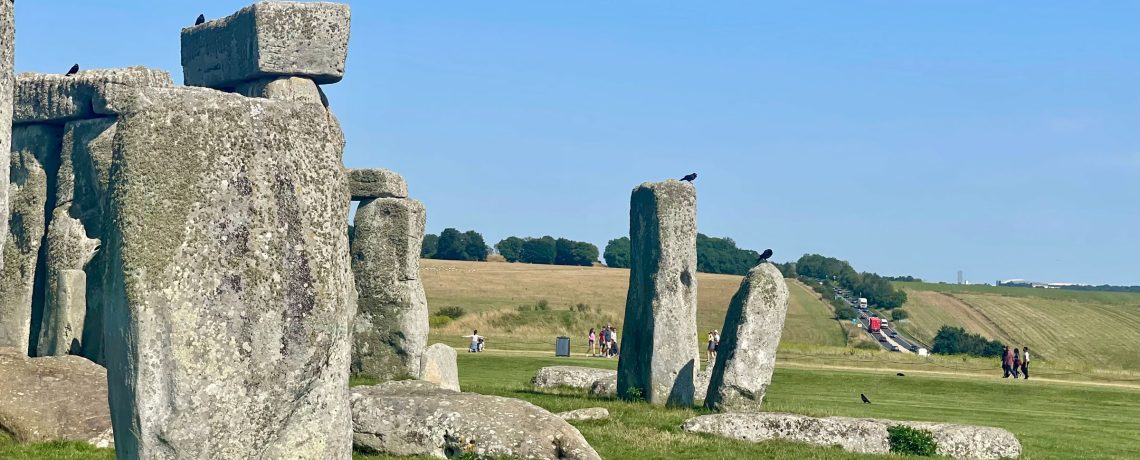
Despair and joy as Stonehenge tunnel plans are cancelled
News that a major infrastructure project to divert traffic passing Stonehenge through a tunnel has been cancelled has been met with both joy and despair.
In the House of Commons yesterday (Monday) Chancellor of the Exchequer Rachel Reeves put the brakes on the plans, as part of her “if we cannot afford it, we cannot do it” cost-cutting exercise – the result of a projected £22 billion overspend inherited from the last government.
The stretch of the A303 which passes Stonehenge is a notorious bottleneck. The previous government had green-lit a scheme to widen the road from a single carriageway to a dual carriageway, and run the strategic route through two miles of tunnel to remove it from the ‘Stonehenge landscape’.
The estimated cost of the project – first mooted in 1994 – was around £2 billion. Construction was due to start in 2025, with the tunnel opening in 2030.
Among those expressing their disappointment was Wiltshire Council, a vocal advocate of the project.
Cllr Richard Clewer, leader of Wiltshire Council, said: We are extremely dismayed and disappointed at the Government’s decision to cancel the A303 Stonehenge tunnel project.
“These improvements are needed now to ease traffic congestion on the A303 and reduce traffic in our communities, and also ensure economic growth in Wiltshire, unlocking jobs and investment in the wider south-west region.
It has taken many years of lobbying and working closely with partners, including National Highways, to bring this major infrastructure project to Wiltshire, and so it is a huge blow to get to the stage when construction is ready to begin, only to have this taken away from us at this late hour.
“There has already been £160 million spent on this project, and cancelling it now wastes that huge investment, including the work to run a power supply up the A360 to the tunnel site. There is currently no viable alternative to the tunnel on the table.
“It would return the Stonehenge landscape to something like its original setting and allow local communities greater access to the ancient stones and the surrounding World Heritage Site.
“We will remain committed to this project and will continue to work closely with all stakeholders to try to bring this project back to Wiltshire, to reduce rat-running in our communities, to reduce journey times to the wider south-west, to boost economic growth in Wiltshire, and to unlock jobs and investment across the region.”
The council had previously said the project would support 21,000 jobs and boost the region’s economy by £9 billion.

Highways England’s plan for the tunnel
Danny Kruger, the Conservative MP who inherited Stonehenge due to a boundary change at the recent general election, said: “Many residents in Wiltshire will be deeply disappointed that the project to relieve the horrendous traffic congestion through our villages has been axed.
“It is essential that the government comes forward with a credible alternative plan – funded by the savings from scrapping the tunnel – to improve the road network around the A303.
“These improvements have been needed for years but delayed in anticipation of the tunnel. The Government must now set out how it will help our towns and villages cope with the volume of cars and lorries that clog up our roads.”
Business West, which operates Wiltshire Chamber of Commerce and lobbies for business interests nationally, said: “The A303 serves as a vital transport corridor for the South West of England, and its single-carriageway portions present challenges.
“In the event of delays on the M4 or M5, the A303 is the only viable major road route into the peninsula. Thus, the efficient functioning of these road systems is crucial for the uninterrupted flow of transport and business operations,” said managing director Phil Smith.
“We are concerned about the potential delay or cancellation of the Stonehenge tunnel project. This infrastructure improvement is essential not only for alleviating traffic congestion but also for supporting the economic growth of the South West.
“Businesses in the region will be disappointed the chancellor has withdrawn commitments to key infrastructure projects like the Stonehenge tunnel.
“The government has pledged to drive economic growth through enhanced infrastructure, including railways and roads.
“These projects are the foundational elements of economic development, facilitating trade, tourism, and daily commuting for individuals and businesses.”
And Richard Smith, managing director of RHA, the Road Haulage Association, said: “We are disappointed at the announcements that key infrastructure projects will be cancelled.
“Investment in the Strategic Road Network is a critical part of the Government’s mission to grow the economy. These vital schemes are long overdue, not just providing a link between the southeast and southwest, but also safeguarding our cultural heritage.
“A failure to invest in our road network now will mean a failure to tackle the growing problem of congestion on Britain’s roads and choke the economic recovery. It’s estimated that congestion costs the UK economy a minimum of £30.8 billion a year.
“In the short-term, the cost of an HGV stuck in stationary traffic for an hour is £120, a crippling cost at a time when hauliers are under serious financial pressures.
“In order to drive forward economic growth, we continue to urge the new government to prioritise investment in key national infrastructure projects to tackle congestion, improve road safety, support business and keep the supply chain moving at optimum levels.”
But the news was welcomed by campaign group The Stonehenge Alliance, a broad coalition of archaeologists, historians, conservationists and environmental groups – including the Campaign to Protect Rural England and Friends of the Earth – whose petition to stop the tunnel has attracted 240,000 signatories.
The group’s president, historian and broadcaster Tom Holland, said: “This entire monstrous project, a proposal to drive a gash of concrete and tarmac through our most sacred prehistoric landscape, should never have got off the drawing board.
“That cancelling it will also save £2.5 billion is obviously an additional perk.”
The tunnel plans had been backed by English Heritage, which operates the Stonehenge site, the National Trust, and by National Highways.
English Heritage had previously said: “A tunnel would reunite the ancient landscape and allow people to better appreciate, enjoy and understand Stonehenge, without the experience being ruined by traffic.
“Our hope is that removing the sight and sound of the noisy, busy road from the World Heritage Site will open up the Stonehenge landscape and enable people to better explore and enjoy it.”
National Highways had said that the road scheme would reduce journey times – ” transforming what can take 60 minutes or longer to just seven or eight minutes,” and reduce the number of accidents on the busy stretch of road.
It also said the scheme would unlock economic development, boosting growth in jobs and housing.
Further Reading: Stonehenge tunnel – and drivers – will just have to wait
I’ve been writing about the Stonehenge tunnel for 30 years, and I doubt I’ll ever report on the ribbon-cutting. Read more at Substack


Crackdown on vape and betting shops welcomed by West leaders
Read more12.08.2026
MoD announces drone test site for Swindon
Read more15.06.2026
Firms urged to strengthen cyber defences as criminals turn to AI
Read more05.05.2026
Investment minister visits two West projects
Read more01.12.2025
Business world responds to Labour’s second Budget
Read more26.11.2025
West auto businesses to share in new government investment scheme
Read more14.07.2025
Spring Statement – business world reacts
Read more27.03.2025
Bristol florist provides Downing Street display – four weeks after opening shop
Read more03.03.2025