Swindon & Wiltshire News

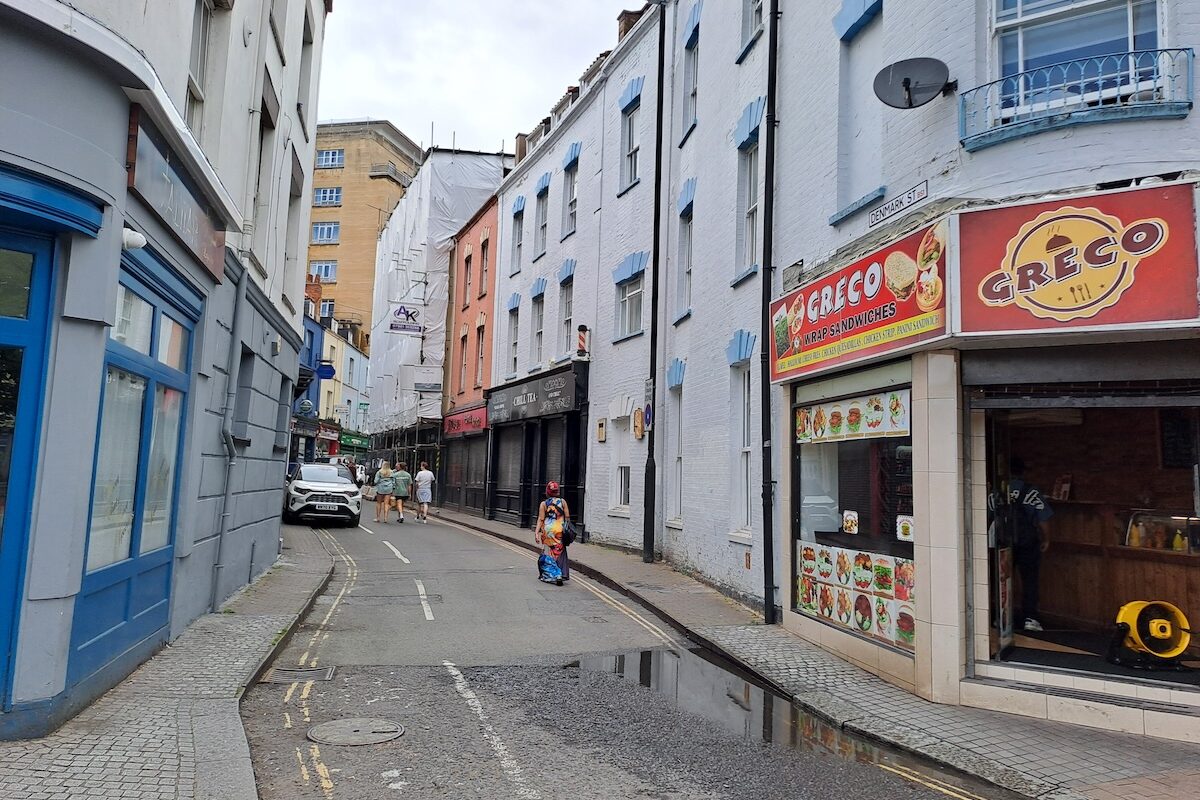
Bristol street to be transformed in £700K night-time economy boost
More than £700,000 of regional funding has been confirmed to transform Denmark Street in central Bristol, in a scheme designed to make one of the city’s busiest entertainment areas safer, more accessible and more attractive to visitors.
The investment from the West of England Mayoral Combined Authority will support permanent changes to the street, which runs alongside the Bristol Hippodrome and is home to a cluster of bars and food outlets. Bristol City Council aims to begin construction early next year.
Denmark Street sits at the heart of Bristol’s theatre and night-time economy, but the council says through traffic can create a hazard in an area used overwhelmingly by people on foot or bike. More than three-quarters of users are pedestrians or cyclists.
A trial closure to vehicles ran from March 2022 to September 2023, encouraging more people to spend time in the street. A subsequent consultation found support for making the changes permanent among local stakeholders, residents and councillors.
Under the permanent scheme, removable bollards will prevent through traffic while retaining access for maintenance and loading. New cycle routes, surfacing upgrades, speed cushions, accessible crossings and wider public-realm improvements will also be delivered.
The works include raised crossings at pavement level at Denmark Street’s junction with St Augustine’s Parade and at Culver Street’s junction with Frogmore Street. Dropped kerbs and textured paving are planned to support blind and partially sighted pedestrians, particularly around Orchard Street, Orchard Avenue, Denmark Avenue and Gaunt’s Lane.
The scheme also includes four new benches, two marked e-scooter and e-cycle parking bays, four cycle stands, eight planters, a zebra crossing on Frogmore Street and a loading bay for businesses including the Hippodrome. Double yellow lines will be added to prevent obstructive parking at the theatre’s accessible entrance.
Helen Godwin, Mayor of the West of England, said the funding would help make the area somewhere people want to spend more time.
“This part of Bristol city centre is home to some of the West’s most popular attractions, particularly the Hippodrome,” she said. “Together, we can make it easier and safer to walk, wheel, and cycle while boosting the region’s nightlife and culture too.”
Bristol City Council’s transport chief, Councillor Ed Plowden, described the funding as a “major milestone” for the project.
“The changes will help create a safer, more attractive and accessible environment around some of Bristol’s best-known cultural venues, making it easier for people to enjoy everything the area has to offer while supporting local businesses and strengthening the city’s evening and night-time economy,” he said.
The Bristol Hippodrome’s theatre director, Ben Phillips, said the improvements would benefit audiences and make the area safer and more accessible.
The money was secured through the government’s City Region Sustainable Transport Settlement. It forms part of a wider programme of walking, wheeling and cycling investment across the West of England, with a further £752 million of transport funding secured for investment from 2027.




North Somerset set to join West of England Authority
Read more18.11.2026
Boarded-up high streets to be brought back to life with £210 million boost
Read more25.09.2026
West of England joins ‘top tier’ of mayoral regions
Read more04.08.2026
Artist’s impression reveals what new Portishead station will look like
Read more15.07.2026
West’s first Mayoral Development Zone announced
Read more21.05.2026
Combined authority ‘jigsaw’ completed as ‘missing piece’ jumps on board
Read more15.04.2026
Metro mayor pledges £7 million as youth unemployment hits 10-year high
Read more18.02.2026
The West of England Mayoral Combined Authority set to approve expansion consultation
Read more21.01.2026