

Swindon & Wiltshire News
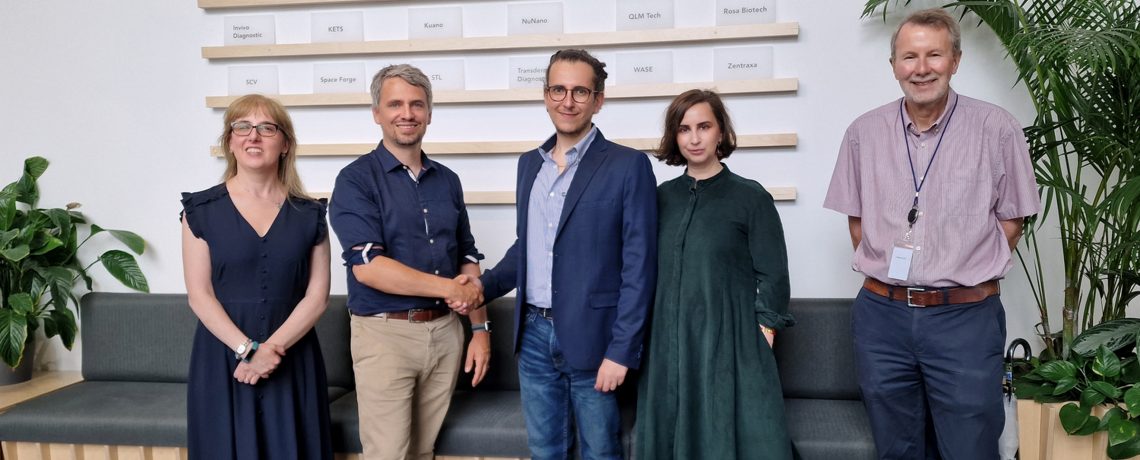
Transdermal Diagnostics raises £1.1 million to develop needle-free blood sugar monitor
Bristol-based medtech company Transdermal Diagnostics has raised £1.1 million to develop the world’s first needle-free blood sugar monitor for sufferers of diabetes.
The technology developed at the University of Bath will allow pain-free and continuous monitoring of sugar levels using affordable disposable patches.
In March this year, the researchers – led by Dr Adelina Ilie, Dr Luca Lipani, and Professor Richard Guy from the Departments of Physics and Life Sciences at the University of Bath – established the spin-out company that will continue to develop the patch.
The spin-out has received has received £800,000 in seed funding and a £300,000 grant from Innovate UK.
The funding will be used to strengthen the company’s engineering team and prepare for clinical trials.
The funding round was led by QUBIS Innovation Fund, which specialises in innovation-focused spin-out companies, and includes Pioneer Group, Immetric, Bristol Private Equity Club, Science Angel Syndicate as well as Innovate UK funding.
Andrew Drylie from Sapphire Capital Partners LLP, investment manager of The Innovation Fund said: “We are delighted to have led this investment round into Transdermal Diagnostics.
“The transdermal approach for glucose monitoring that Transdermal Diagnostics is developing will have a disruptive impact on the diabetes market, we are additionally excited by the company’ potential to expand into the wellness and sports nutrition industries. This funding round alongside the Innovate UK funding will help support them in this journey.
Founder and CEO, Dr Luca Lipani, said: “We are excited to have on board investors with a deep understanding of the transformative potential of Transdermal Diagnostics’ technology platform.
“These funds will kick-start our mission to revolutionise the prevention, diagnosis and management of chronic conditions, starting with diabetes”.
Diabetes is a global health crisis currently afflicting hundreds of millions of people and is projected to rise to 783 million by 2045.
Commercial sugar monitors are unpleasant, expensive, inconvenient, and cause poor disease management, exposing patients to an increased risk of developing life-threatening co-morbidities and reducing overall life expectancy.
Transdermal Diagnostics is addressing this challenge by developing a wearable smart-patch for non-invasive and real-time monitoring of health biomarkers. The technology uses miniaturised biosensors to sample the fluid that bathes the living cells of the skin, in which biomarkers, including sugar, are at very similar levels to those in blood.
The patented platform features a unique multiplex architecture that makes use of preferential pathways in the skin to access this fluid. A major selling point of the approach is that the amount of sugar extracted can be detected and quantified non-invasively, without puncturing or disrupting the skin, thereby avoiding any need for a blood sample or the use of needles.