Swindon & Wiltshire News
New rail operator launches £2.6 million share offer in Swindon
The UK’s first co-operatively owned train operator, Go-op, launched a £2.6 million fundraising campaign in Swindon yesterday (Wednesday).
The pioneering co-operative aims to run rail services between Swindon and Taunton by May 2026, and needs to raise £2.6 million by November next year to get four trains on the tracks.
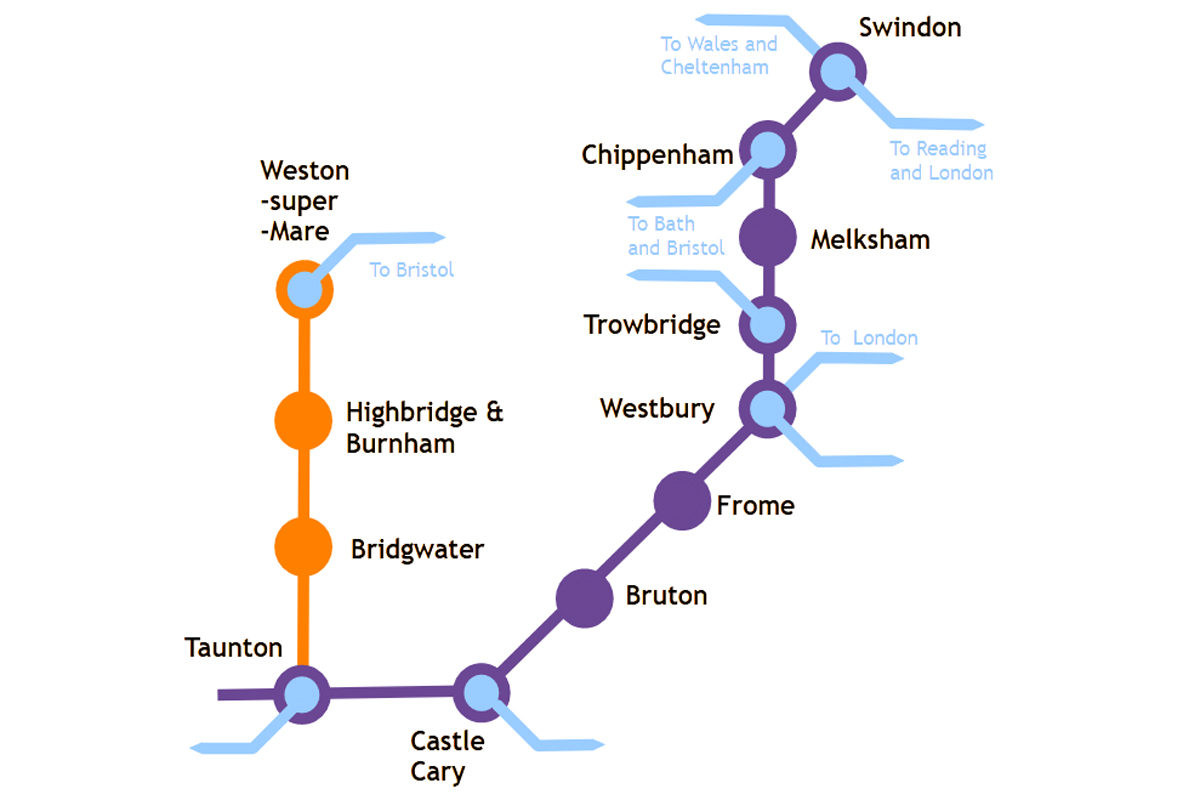
While rail passengers who want to travel east-west – between Bristol, Swindon, Reading, and London – are well served, north-south routes through Wiltshire and Somerset – calling at stations like Melksham, Frome, and Castle Cary – can expect a far less frequent or reliable service.
Go-op aims to change that.
The operator was given the go-ahead to launch by Britain’s railway regulator The Office of Rail and Road back in November. Now it needs to raise £2.6 million to get trains on the tracks.
Changing the lives of passengers
Go-op chairman Alex Lawrie explained that Go-op would operate four trains, running two at a time.
“The goal is to connect smaller towns with an hourly service and provide connections for onward journeys to larger cities like Bristol and London,” he said.
“Melksham, for instance, will see the daily number of trains calling at its station double.
“Go-op will change the lives of rail passengers and drivers because, for the first time, they will have a viable rail option.”
Go-op won’t be breaking speed records
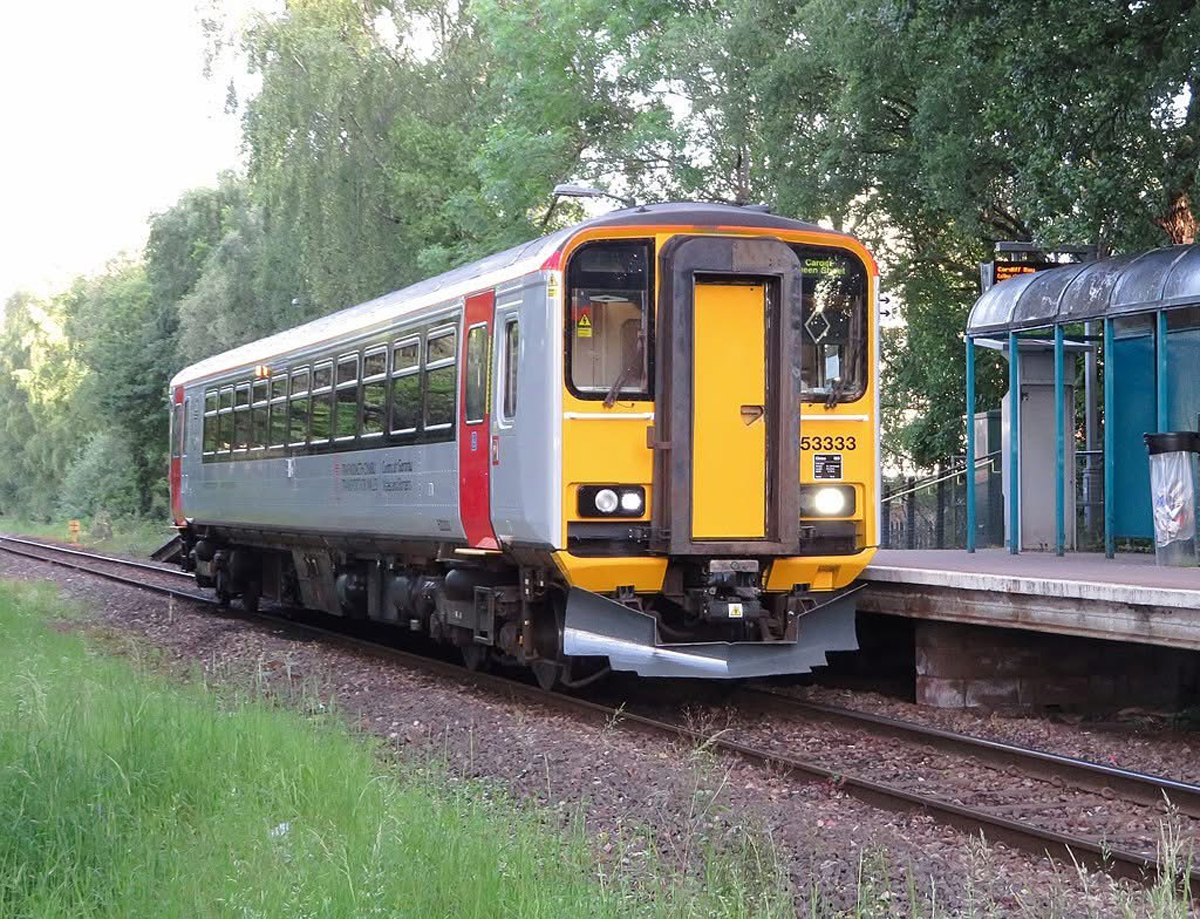
While large train operators roll out the latest rolling stock for high-speed connectivity on electrified lines, Go-op will be leasing older rolling stock as larger operators look to upgrade.
The co-operative has its eyes on the Class 153 diesels used on rural branch lines in Wales.
With only 10 per cent of the lines on its route electrified – the line between Swindon and Chippenham – Go-op wants to find other, sustainable ways of powering its trains, which might include battery storage or converting to hydrogen.
And they’re not aiming to compete on speed, luxury, or price. “We’re not looking to break any speed records,” said Alex. “The trains will run at 75mph. The ‘secret sauce’ is about providing connections where there were none before.”
Travel won’t necessarily be cheaper, either. The UK operates a system of charging rail users between departure points and destinations, using whatever train – owned by whatever operator – is convenient to them. So in many cases, Go-op will be paid a part of a traveller’s overall ticket price.
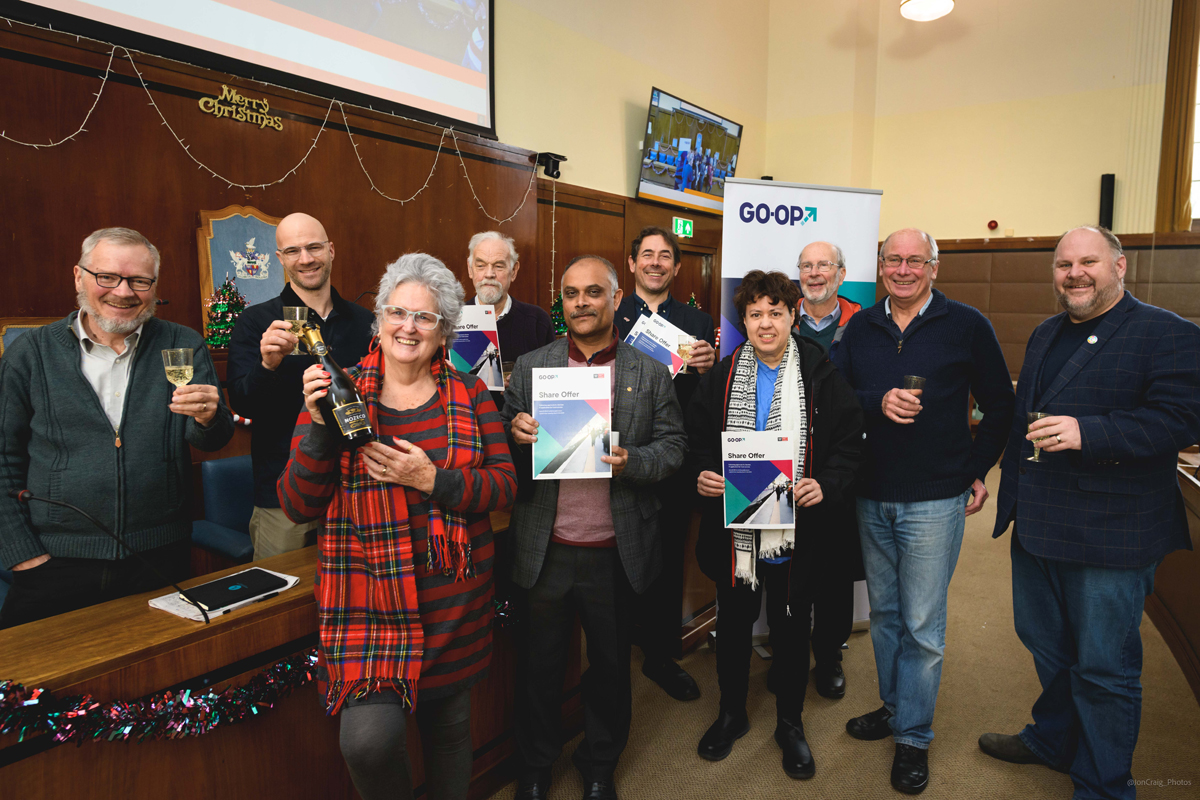
Go-op launches its public share offering in the council chamber at Swindon Borough Council with nosecco from The Co-op
Image courtesy of @JonCraig_Photos
What does ‘co-operatively owned’ mean?
A co-operative is a business or organisation that is democratically owned and controlled by its members – rather than external investors – to meet their shared needs.
They can take several forms, including:
- Consumer co-ops: Businesses that are owned by their customers. Retailer Co-op is probably the best-known. If you have a membership card, you have voting rights and will share in a financial dividend.
- Worker co-ops: These are far less well known, although healthy eaters will be aware of the Suma brand, which specialises in vegetarian, fairly traded, organic, ethical, ecological and natural products and is owned by its 200 workers.
Go-op aims to be a hybrid co-operative, with 50 per cent of the business being owned by consumers, 25 per cent being owned by its workers, and 25 per cent owned by external ‘social investors’.
Passengers will not need to be a Go-op member to travel on its services.
The company already has 250 members, many of whom are prospective passengers. For a minimum investment of £25, people living in Wiltshire or Somerset who plan to use Go-ops services can help to kick-start the business.
There are also social investor plans for investors who live or are based outside of Wiltshire or Somerset, or who don’t plan on using the services. The minimum commitment is £500. Go-op hopes its social investors will include larger companies in the co-operative economy.
Alex said Go-op was looking at financial returns of around 12 to 14 per cent for members, but warned it was a ‘full risk investment’. “Please don’t invest what you can’t afford to lose” was the message.
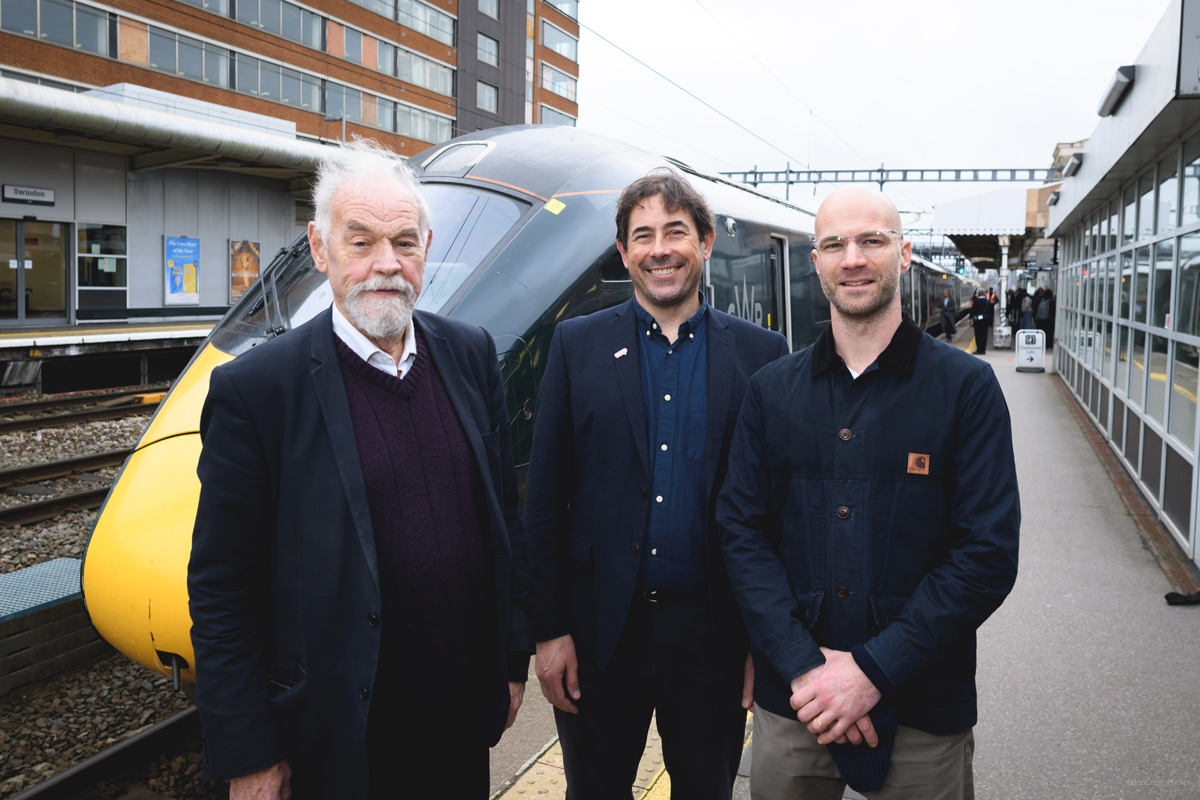
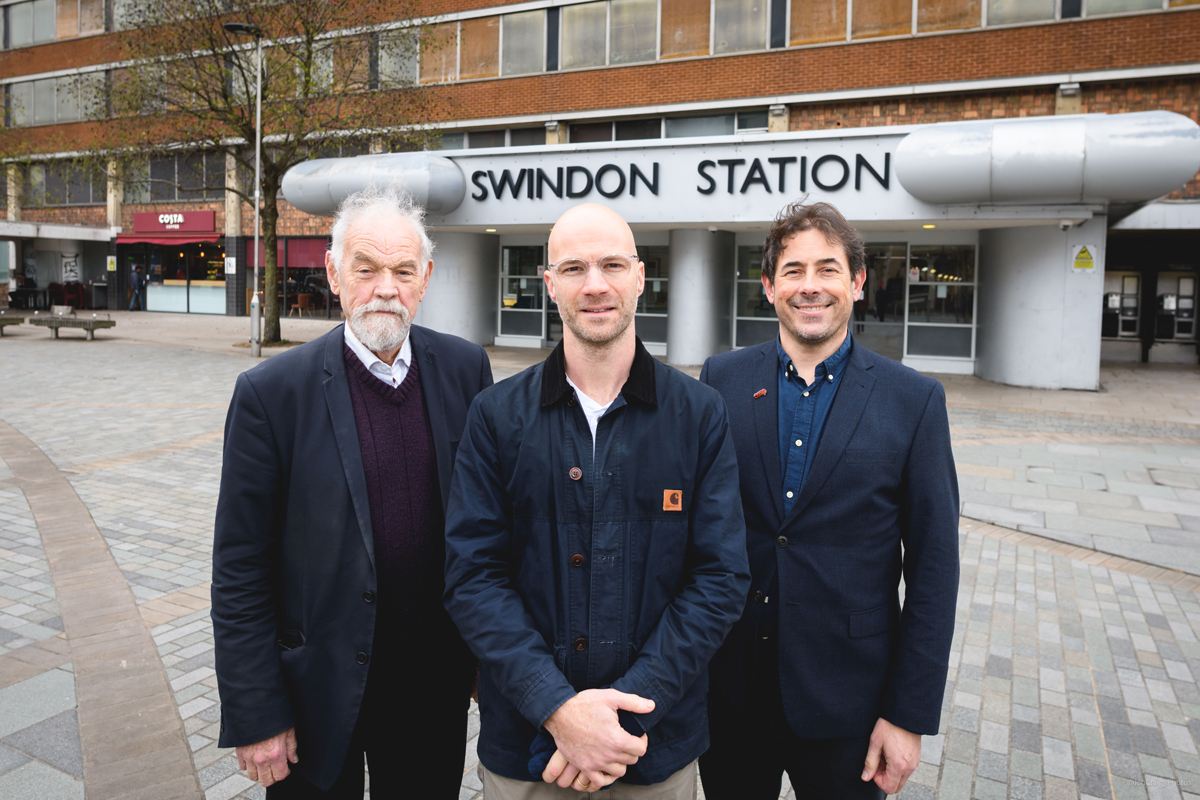
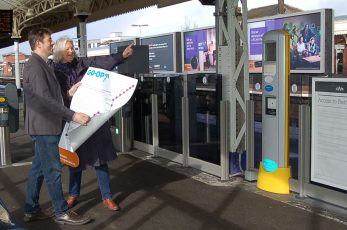
Go-op board members John Hassall, Alex Lawrie and David Warren at Swindon Station
Image courtesy of @JonCraig_Photos
A project of national significance
The Labour government has abolished the rail franchising policy and is bringing most rail services back into public ownership as contracts expire to form Great British Railways.
But ‘open-access operators’ that buy ‘train paths’ from railway infrastructure companies such as Network Rail will not be subject to nationalisation.
Go-op is already receiving approaches from other under-served communities about how they can improve their local rail networks.
“This is a project of national significance,” said Alex. “Go-op is very much a ‘foot in the door’ service. Once it is established we’ll be looking at other routes that connect with our initial network.
“And there’s a Go-op group looking at establishing Go-op bus.
“We would also like to support the growth of a family of travel co-ops, including car-share schemes.”
Alex said “enormous sums of money” will be needed in the first few years of operation. “But it will be easier to secure loans at lower rates of interest once we’re operational,” he said.
Social investors can join the fundraising campaign at https://www.crowdfunder.co.uk/p/go-op-som-wilts-rail
Main image: Go-op board members John Hassall, David Warren and Alex Lawrie at Swindon Station
Image courtesy of @JonCraig_Photos

New Swindon-Taunton rail service UK’s to be first run by a co-operative
Read more19.11.2024