

Swindon & Wiltshire News
How will the increased National Living Wage impact hiring behaviour? – CMD Recruitment
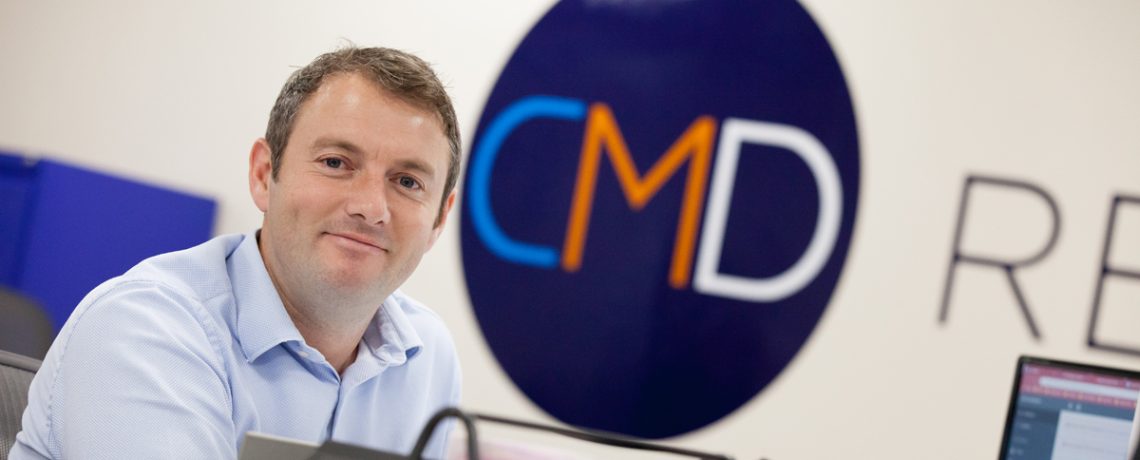
Dan Barfoot of CMD Recruitment explores the increase in the National Living Wage, how it is likely to impact employees and employers, and why finding the right hire will be more important than ever.
As we approach 2024, employers are facing unprecedented challenges. From economic uncertainty to skill gaps and talent shortages, managers have a lot to contend with.
Dynamic modern business leaders are, of course, no strangers to navigating and juggling various pressures and demands, but next year we’ll see the biggest-ever increase in the National Living Wage in the UK.
Increasingly, businesses are concerned about the possible impact this could have on their businesses.
What will the National Living Wage be in 2024?
Employees are in for a welcome boost to their income in 2024 — as of April, the National Living Wage will be increasing from £10.42 to £11.44.
On top of this, the National Living Wage is being extended to those aged 21 and over.
This £1.02 increase recommended to Chancellor Jeremy Hunt by the Low Pay Commission, is equivalent to £1,800 a year for those on the lowest income. This is the largest-ever increase in cash terms, and the first time it has risen by over £1.
As well as changes to the National Living Wage, the National Minimum Wage will also be increasing — those between the ages of 18 and 20 will see an increase to £8.60 an hour.
A much-needed boost for many families
According to government estimates, as many as 2.9 million people are likely to benefit from increased minimum pay rates and for many, it couldn’t come at a better time.
A lot of employees are struggling financially, which is having a knock-on impact in terms of mental health and productivity. Following the pandemic, The Great Resignation and the cost of living crisis, employees are having to work incredibly hard to handle an increasing workload, yet they are also struggling to pay the bills.
In fact, in-work poverty now impacts one in eight workers in the UK.
When we consider the financial situation of many employees in the country, the statistics are fairly startling — according to Financial Capability, a quarter of employees lose sleep over money worries, while 11 per cent of employees are having trouble making ends meet and it’s impacting their productivity — 59 per cent say that it’s preventing them from performing at their best.
We’re also losing 18 million working hours each year due to financial stress.
In general, people are feeling increasingly anxious, stressed and hopeless as a result of the cost of living crisis.
For people in this situation, the rise in the National Living Wage will undoubtedly be welcomed and celebrated.
But How could this increase in the National Living Wage impact employers and employment in general?
Will an increasing National Living Wage result in increasing job losses?
Although many will view this as welcome good news, as with most things, the reality is a bit more nuanced.
While employees are celebrating, business owners might be more than a little concerned about the laws of supply and demand — when labour costs more, employers may hire less because of it.
And in fact, they may have to let go of certain employees they can no longer afford to keep.
According to the National Bureau of Economic Research, when the minimum wage rises, job losses for those earning minimum age will be larger where they can be more easily substituted.
Today, it is altogether possible that businesses may try to replace such workers with machinery or AI.
Where this is not possible, businesses may attempt to get an employee’s work covered by the remaining workforce.
However, in situations where minimum wage employees can’t be easily substituted in this way, it’s likely that job losses will be modest.
Will SMEs be most affected?
After the announcement was made regarding the NLW increase, businesses were understandably concerned, with some labelling it a ‘death knell’.
SMEs in particular seem to be anticipating the worst. Critics say that as a result of the wage increases, small businesses with already low profit margins might struggle to absorb the higher labour costs.
This could result in even lower profits or, in extreme cases, closures.
Some businesses believe they’ll be forced to either cut back on hiring or reduce hours for existing employees.
Yet more believe they will simply struggle to compete against bigger organisations that are better able to absorb the increased labour costs.
Business owners are beginning to speak out publicly — Leon Samuel Barton, Managing Director of the Grill Pub Co, says the planned wage increase is “… a killer. I know we [will] have to fundamentally change our business to even survive.”
Simon Wood, founder of Wood Restaurant Group, discusses the reality of having to source more money to pay his employees: “And where does this [money] magically appear from? Without a review of the obscene tax that is Business Rates and reducing the VAT as we’ve spoken of for so long, this is the final nail for so many small businesses.”
The good news is, there is research to indicate that far from the catastrophic fate that many believe it to be, raising the NLW could actually benefit small businesses by boosting consumer spending and reducing turnover.
One study suggests that small businesses don’t tend to cut jobs in response to an increase in minimum wage, but rather they benefit.
A higher wage makes it easier to recruit and retain employees — turnover rates go down and employees are ultimately more productive, which is beneficial for the business itself.
Why it’s increasingly important to find the right hire
The reality is that the rise in the National Living Wage is coming into place from April 2024 — knowing this, businesses need to make smart decisions regarding their recruitment.
It’s more important than ever to attract and retain quality candidates, to reduce turnover rate and maintain exceptional levels of productivity.
Dan Barfoot is operations manager at CMD Recruitment, which has offices in Devizes, Melksham, Calne, and Bath.
Latest: Understanding the National Living Wage Increase – CMD Recruitment




Permanent recruitment fell sharply in April – report
Read more13.05.2026
Why salary transparency is no longer optional when hiring – CMD Recruitment
Read more06.05.2026
Permanent staff appointments fell at quickest rate for six months in March
Read more15.04.2026
Why South West workers are staying put in their jobs – CMD Recruitment
Read more18.03.2026
Fall in permanent job placements slows – but reverse is some way off
Read more12.03.2026
Average South West wage revealed in new report
Read more26.02.2026
Permanent hires continue to fall, but temp jobs rise in South West
Read more16.02.2026
Jobs market cooled in December – but pay growth was stronger
Read more13.01.2026